What Is Socarrat? How to Get the Crispy Paella Bottom
Written by Fernando Molina, Founder of Paella Legacy
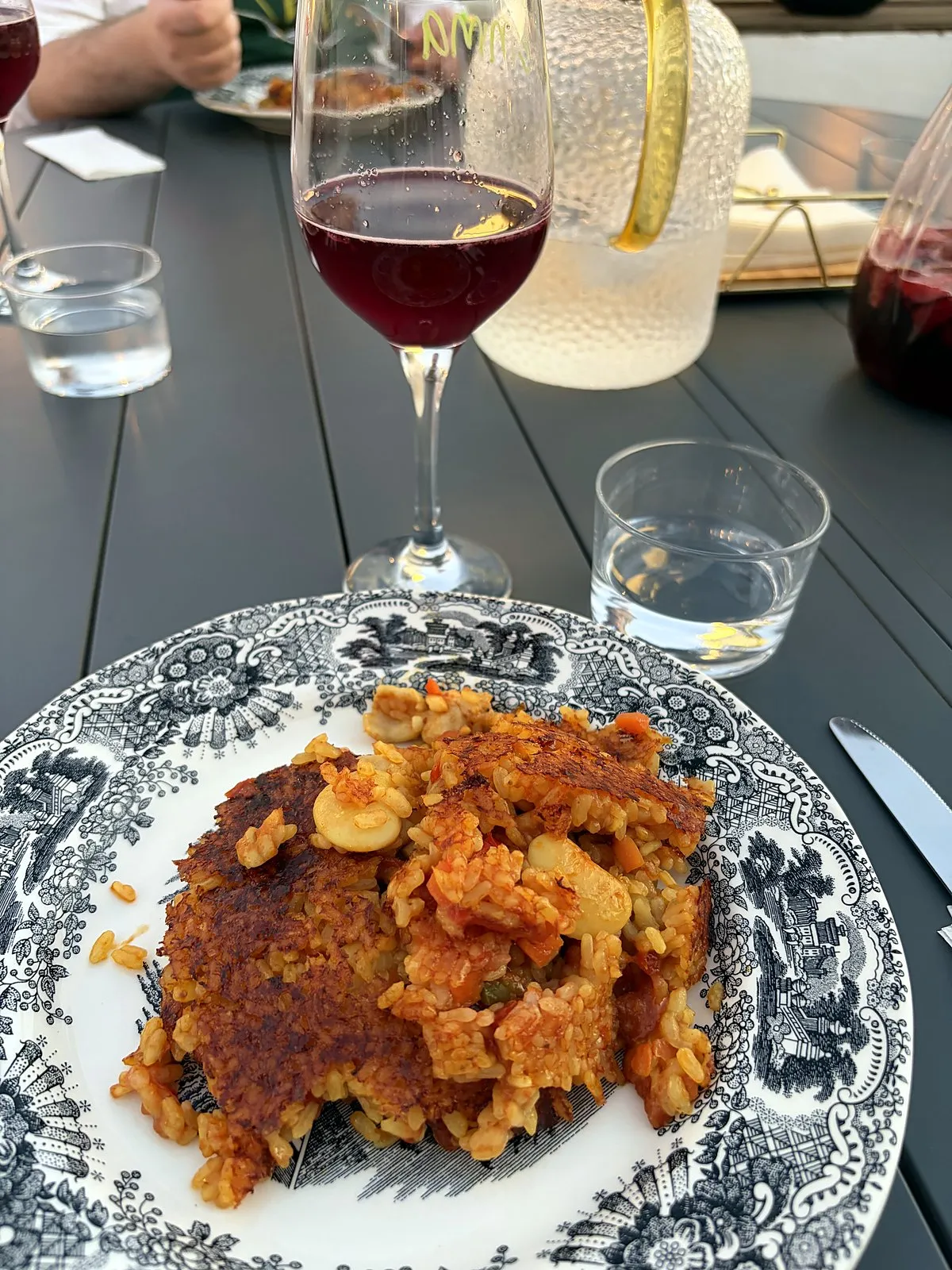
Socarrat is the thin, toasted, caramelised layer of rice that forms on the bottom of the pan when a paella finishes cooking. It's crisp and golden, it tastes of toasted rice and caramelised sofrito, and it's the most prized part of the pan. Paella is Valencian in origin, and Valencian cooks treat a good socarrat as the mark of a well-made paella. You get it by cooking the rice in a thin, even layer in a wide pan, leaving it alone once the stock is in, and giving it a little extra time at the end. In our rooftop class in Seville (90 minutes, €177 per person, max 10 guests) you learn exactly how.
This guide explains what socarrat is, how to tell it from burnt rice, how to get it, and why it's harder on a home stove than you'd expect.
What does socarrat mean?
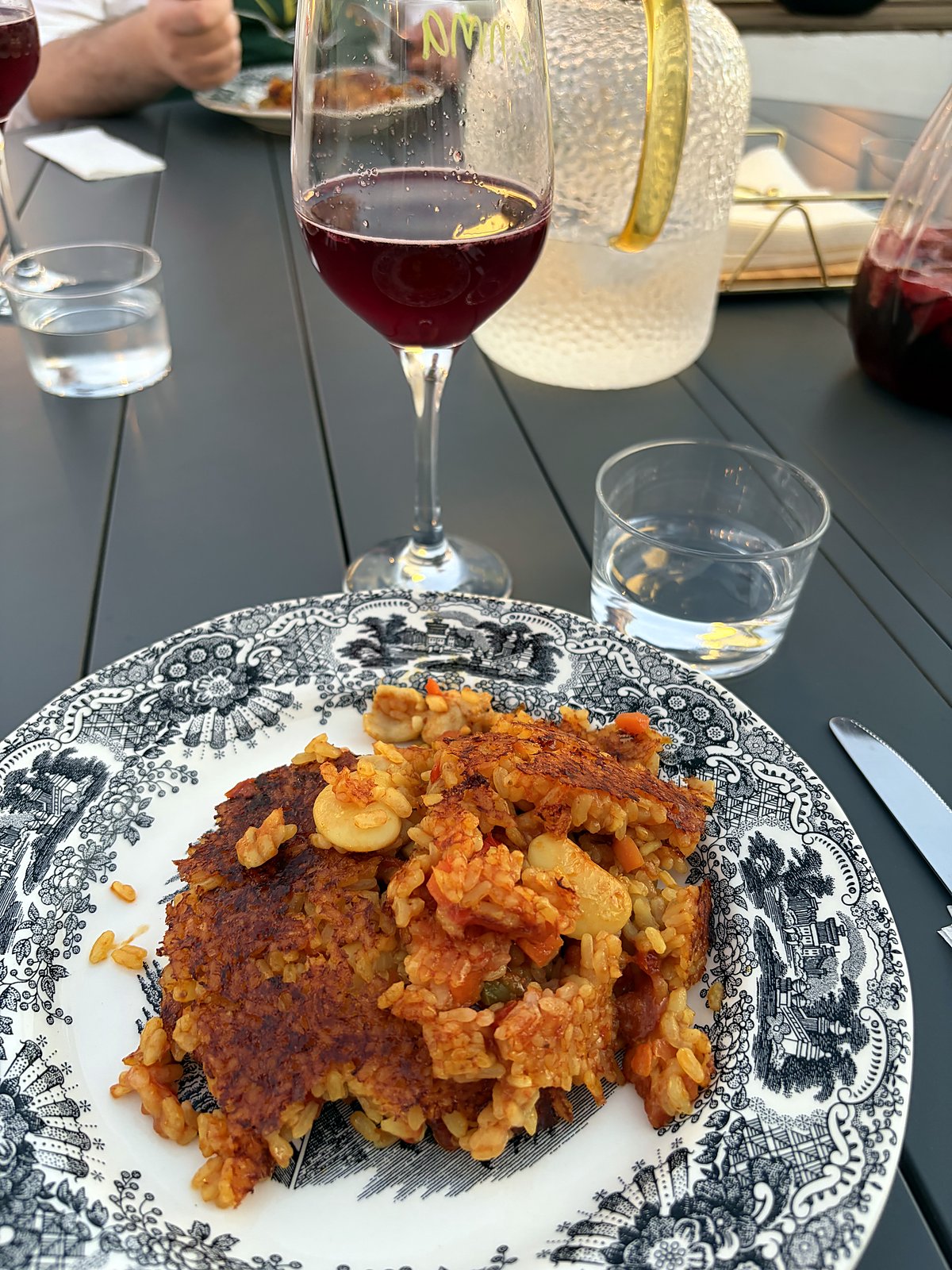
Socarrat comes from the Spanish verb socarrar, meaning to scorch or toast. The word describes the layer itself: rice that has fried against the hot pan once the liquid has cooked off, while the sofrito underneath caramelises. It should be dry and crisp, never soggy and never black.
Many cooks call it the best bite of the dish. It's a concentrated version of everything in the pan: toasted rice, saffron, tomato and olive oil.
Is socarrat just burnt rice?
No, but the line between the two is thin, and this is the question first-timers ask most. Socarrat is golden to deep brown, crisp, and smells of toasted rice or caramel. Burnt rice is black, bitter and smells acrid. Cooks often describe the same warning signs in order: first a crackle from the pan, then a toasty smell, and only then, too late, the smell of smoke.
Here are the signals experienced cooks use:
- Sound. A gentle crackle or popping means the last of the stock is gone and the rice is frying against the pan. A sharp, dry sizzle means pay close attention.
- Smell. Toasted, nutty, slightly sweet is good. The moment you smell something acrid, the heat comes off.
- Sight. Scrape a small section at the edge with a spoon. Golden brown is socarrat. Black is overdone.
These are cook's rules of thumb, not a stopwatch, and every pan and flame behaves a little differently. That's why a chef beside you matters the first time.
How do you get socarrat?
You get socarrat by combining four things: a wide, shallow pan, a thin even layer of rice, even heat, and patience once the rice is in. The paella must be a dry rice dish, so the stock should be absorbed at the same moment the rice is cooked. Then a short extra burst of heat toasts the bottom.
The key rules are these:
- Use a wide, shallow pan. A thin layer of rice cooks evenly and quickly, and gives you more bottom surface to crisp. Traditional paella pans are carbon steel or enamelled steel. Non-stick pans and heavy cast iron work against you.
- Use the right rice. Short- or medium-grain Valencian varieties such as bomba, senia and bahía absorb stock without turning creamy. Bomba is the most forgiving, and it's the rice we use.
- Don't stir once the rice is in. Stirring releases starch and gives you a creamy, risotto-style texture. Mix the ingredients before the rice goes in, then leave it alone.
- Keep the heat even. Hot spots scorch one side and leave the other pale. Rotating the pan helps if your burner is smaller than the pan.
- Finish with attention, not panic. A short extra burst of heat at the end forms the crust, but too much for too long scorches it. Listen and smell, and take the pan off the heat when it crackles and smells toasty.
- Rest it. Let the paella sit for a few minutes before serving so the rice settles and the crust sets.
Cooks disagree on some details, such as how often to rotate the pan or whether to finish in the oven. The principles above are the common ground.
Why is socarrat harder to get on a home stove?
A paella pan is much wider than a normal home burner, so the centre gets hot while the edges stay cool. That's the main reason home paellas come out pale in places and scorched in others. Traditional paella is cooked over a wide, even heat, often an open fire, where the flame reaches the whole pan.
At home you can improve your odds by straddling two burners, rotating the pan often, and cooking a thin layer of rice. Even so, many home cooks accept a lighter socarrat than a restaurant gets. If yours isn't perfect the first time, you haven't failed. You've learned how sensitive the dish is.
Can you get socarrat with chicken and vegetables?
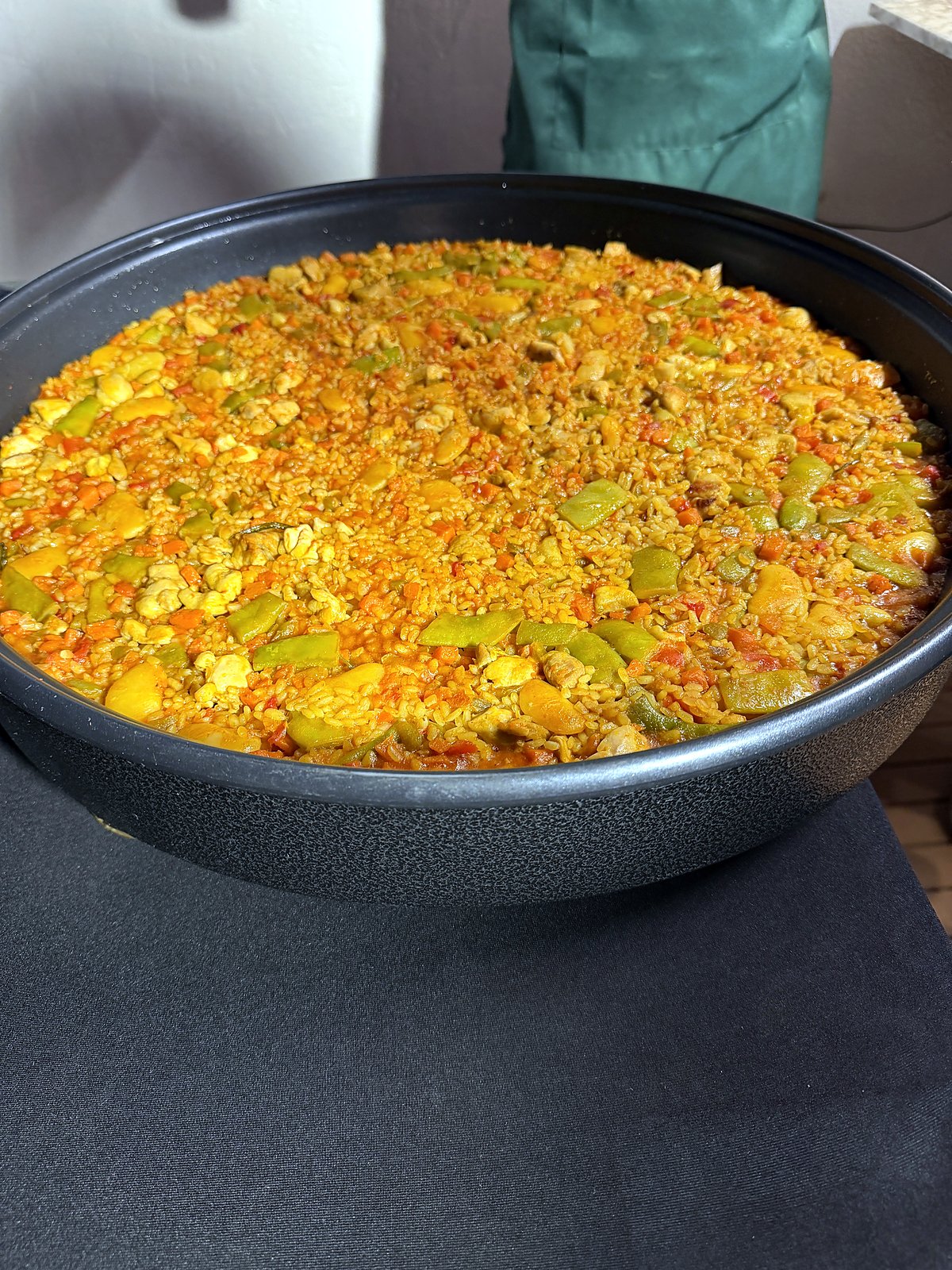
Yes. Socarrat comes from the rice and the sofrito caramelising on the pan, not from seafood. Our class cooks the traditional chicken-and-vegetable paella, and paella is Valencian in origin, where the oldest versions used chicken, rabbit and garden vegetables. There's no fish, seafood, pork or nuts on our menu, ever.
Excess moisture and fat get in the way of the crust, which is one reason a good paella doesn't throw every ingredient into the pan. Each ingredient has to earn its place.
How do you learn to make socarrat in Seville?
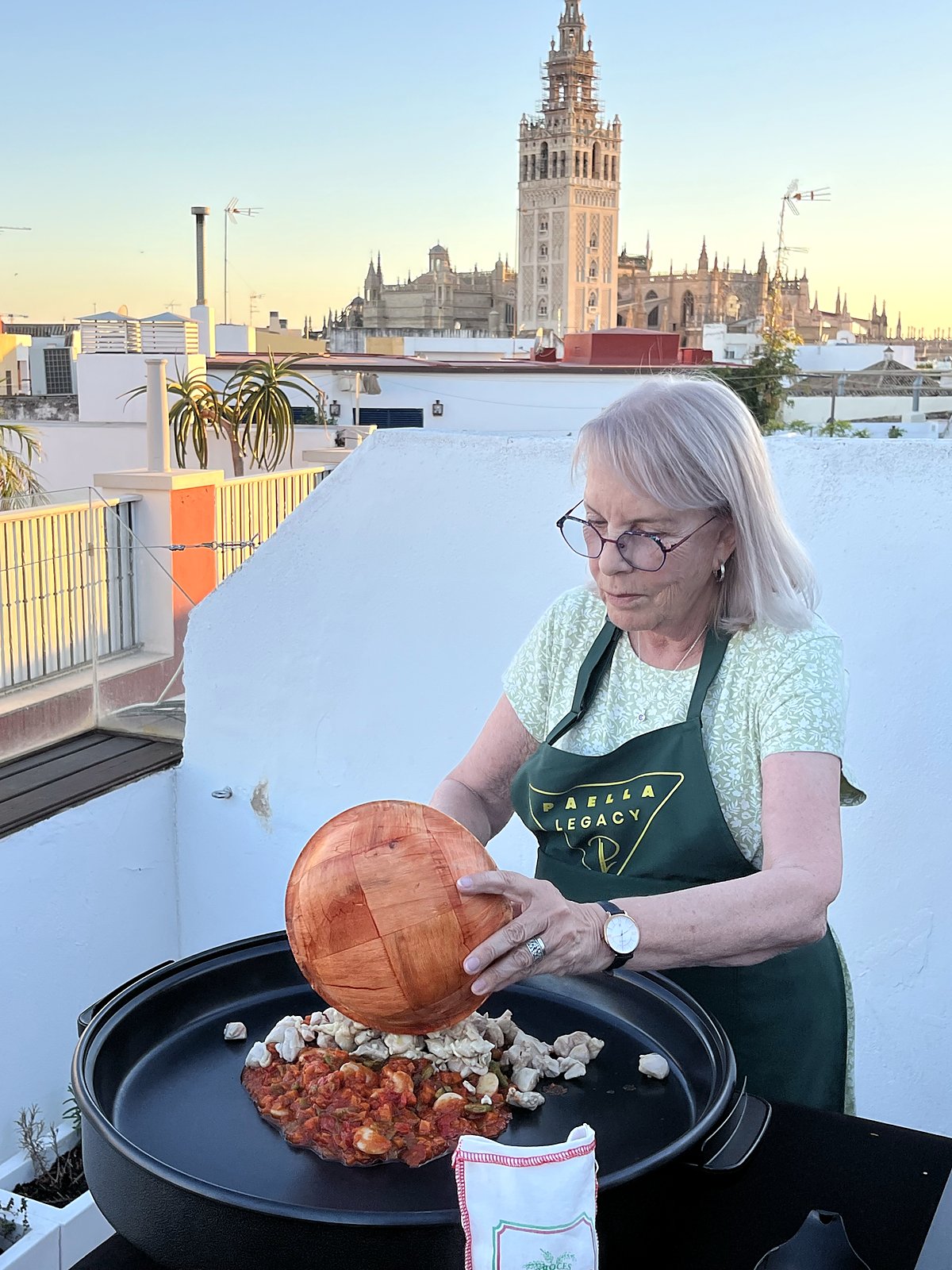
You cook it yourself, with a chef beside you. Our class is about 90 minutes, hands-on, on a private rooftop in Seville's historic centre with the Cathedral and the Giralda in view. A local chef teaches in English and guides you through each stage: the sofrito, the saffron, the stock, the rice, and the final heat that forms the socarrat. Groups are capped at 10 guests, so everyone gets time at the pan.
It costs €177 per person. That includes the full paella dinner, artisan sangria and appetizers, so you don't need a restaurant reservation afterwards. Then you sit down on the terrace and eat what you cooked. You also get a recipe card to try it again at home.
We meet at the ancient Roman columns at Calle Mármoles 2, in Seville's historic centre and walking distance from the Cathedral. More than 10,000 travellers have cooked with us, and we hold 700+ reviews at a 4.9★ average.
Not sure what belongs in a paella at all? Start with our guide to what paella is and isn't, or see the full paella cooking class in Seville.
Frequently asked questions
What is socarrat in paella?
Socarrat is the thin, crisp, caramelised layer of rice that forms on the bottom of a paella pan once the stock has cooked off. The word comes from the Spanish socarrar, to scorch or toast. It's prized in Valencia, where paella originated.
Is socarrat supposed to be burnt?
It's toasted, not burnt. Good socarrat is golden to deep brown, crisp and smells nutty or caramelised. Burnt rice is black, bitter and smells acrid. If you smell smoke, you've gone too far. Take the pan off the heat when you hear a gentle crackle and smell toasted rice.
Can you make socarrat at home?
Yes, but it's harder than in a professional kitchen. A home burner is smaller than a paella pan, so heat is uneven. Use a wide, shallow pan, a thin layer of rice, straddle two burners and don't stir once the rice is in. Expect a lighter crust the first few times.
Does socarrat need seafood or special ingredients?
No. Socarrat comes from rice and sofrito caramelising against the pan. It works just as well with chicken and vegetables, which is the traditional Valencian approach and the paella we cook in our Seville class. It's technique and heat control that make the crust, not the ingredients.
Can I learn to make socarrat in a class in Seville?
Yes. Our 90-minute rooftop class covers each stage of the paella, including the final heat that forms the socarrat. It's hands-on, taught in English by a local chef, with a maximum of 10 guests. The price is €177 per person, including dinner, artisan sangria and appetizers.
Ready to make your own socarrat?
Book your seat on our Seville rooftop at paellalegacy.com/sevilla. Questions first? Our FAQ covers the practical details.