I cook paella almost every day. I've made thousands of them — on rooftops overlooking the Seville Cathedral, in home kitchens, at family gatherings, and in front of travelers from all over the world. And the single most common thing I hear is: "I had no idea this is what paella actually is."
The dish the world thinks of as paella — the generic yellow rice with random seafood you find in tourist menus — is usually a shadow of the real thing. Authentic paella is a specific, carefully crafted dish with centuries of history, regional pride, and a cultural weight that few other foods carry.
So let me explain it properly.
Where Paella Comes From
A story that starts with Moorish irrigation and ends with Ernest Hemingway.
The story of paella begins with rice — and rice in Spain begins with the Moors. When Muslim rulers controlled Al-Andalus (most of the Iberian Peninsula), they introduced sophisticated irrigation systems and rice cultivation around the 10th century. The marshy lands surrounding the Albufera lagoon near Valencia became the perfect rice-growing terrain.
By the 15th century, the farmers and laborers working Valencia's rice paddies had developed a habit: they'd gather what was available around them — rice from the fields, snails from the ditches, rabbit or duck from the surrounding land, green beans, water from the Albufera — and cook it all together in a wide, flat pan over an open fire fueled by orange tree branches.
That pan is what gives the dish its name. Paella is a Valencian word meaning "frying pan," derived from the Latin patella. In Valencia, to this day, paella still technically refers to the pan itself, not the dish. Locals call the food arròs — rice.
From Farmer's Lunch to National Icon
For centuries, paella remained a humble regional dish — a worker's lunch, cooked outdoors, eaten directly from the pan. On Sundays, Valencian families would cook it in the open air near the Albufera while women attended church. It was communal by nature: one pan, one fire, everyone gathered around.
What changed everything was Spain's tourism boom in the 1960s. Suddenly, millions of Europeans descended on the Mediterranean coast, and paella became the emblematic "Spanish dish" served to visitors. In 1959, Ernest Hemingway had written about paella after visiting Valencia, further cementing its international fame.
The problem? As paella went global, it lost its identity. Restaurants started throwing in whatever would sell — chorizo, random vegetables, peas, pre-cooked rice. Every coastal town served its own version, each claiming authenticity. The dish that had been carefully defined by its limitations became a free-for-all.
The Three Types of Paella
Only three are recognized. Everything else is "arroz con cosas" — rice with things.
This is where it gets passionate. Ask any Valencian and they'll tell you there is only one real paella — Paella Valenciana. The rest are rice dishes. Good ones, maybe. But not paella.
In 2019, chef Rafael Vidal and cultural anthropologist Pablo Vidal from the Universidad Católica de Valencia surveyed 400 cooks over 50 across 266 Valencian villages. They confirmed 10 core ingredients that define the original dish. The research settled debates that had lasted generations.
In practice, three types have become widely accepted:
Paella Valenciana
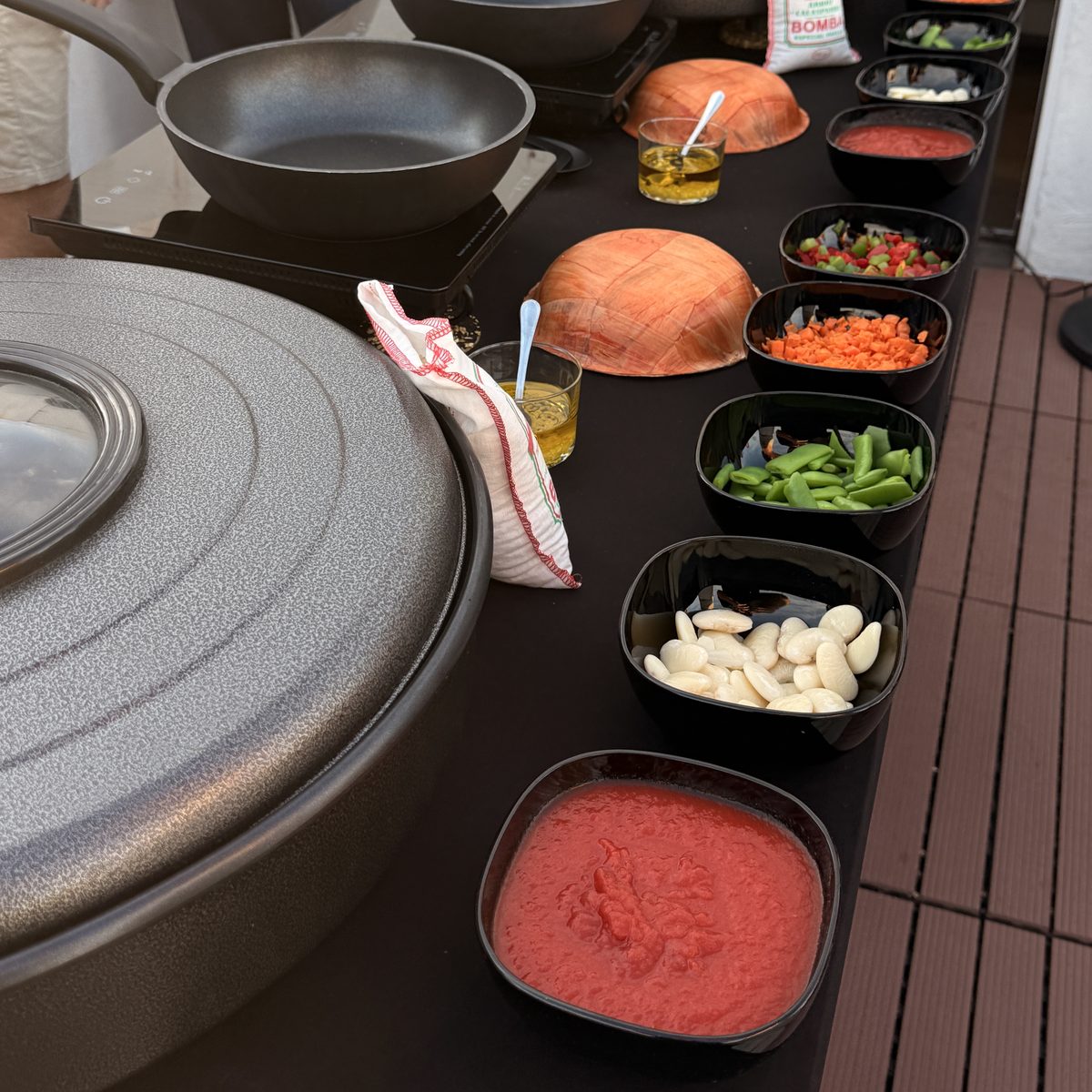
This is the real paella. The one Valencians will defend with their lives. It was born in the rice paddies, cooked over orange-wood fires, and made with whatever the land provided — rabbit, chicken, sometimes duck or snails, flat green beans (ferraura), large white lima beans (garrofón), tomato, olive oil, saffron, and water.
No seafood. No chorizo. No peas. No onion. The beauty is in its simplicity: the rice absorbs the deeply flavored broth, the saffron gives it color and aroma, and the socarrat forms at the bottom. It's elemental cooking at its best.
Paella de Marisco
As paella culture spread from the inland rice fields to the Mediterranean coast, Valencian fishermen naturally swapped the rabbit and chicken for whatever came off their boats — shrimp, mussels, clams, squid, and sometimes cuttlefish or langoustines. The seafood is cooked in its shell, and a rich fish stock replaces the water.
The flavor profile is entirely different from the original: briny, concentrated, and oceanic. When done well, it's extraordinary. The rice turns golden from the saffron and absorbs the essence of the sea.
Paella Mixta
This is the version most people outside Spain think of when they hear "paella." It combines meat (usually chicken) with seafood (shrimp, mussels, squid) in a single pan. Valencians call it preparación barroca — baroque preparation — and many don't consider it a true paella at all.
Is it delicious? It can be, when made with care. Is it traditional? Not really. The mixed flavors work against each other — the subtlety of seafood broth gets overwhelmed by chicken fat, and you lose the clarity that makes the other two versions sing. But if a restaurant does it well, there's no shame in ordering it. Just don't tell anyone from Valencia.
The Ingredients That Matter
Paella is a simple dish. Which means every ingredient has to earn its place.
Bomba Rice
The gold standard. Grown in Valencia's Albufera region, bomba rice absorbs 2-3 times its volume in liquid without turning mushy. Each grain stays separate and firm, soaking up all the flavor of the broth. The alternative is senia (or bahía), which is slightly creamier and more traditional. Never use long-grain, basmati, or arborio — they produce fundamentally different results.
Saffron
The most expensive spice in the world, and the soul of paella. It gives the rice its golden color and an unmistakable floral, honey-like aroma. Cheap substitutes like turmeric or food coloring imitate the color but completely miss the flavor. Good saffron from La Mancha or Teruel makes a difference you can taste from the first bite.
Virgin Olive Oil
The base of the sofrito. A generous pour of good Spanish olive oil is where the flavor starts building. We use virgin — not extra virgin — because the oil is heated to high temperatures, which breaks down the delicate compounds that make extra virgin special. Virgin olive oil handles the heat better and still delivers excellent flavor. It coats the rice, carries the saffron, and helps create the socarrat at the bottom. Butter has no place here.
The Sofrito
Grated ripe tomato cooked down in olive oil until it darkens and concentrates. This is the flavor foundation — the deep, sweet base that everything else builds on. A proper sofrito takes patience. Rush it and the paella tastes flat.
Broth (or Water)
Traditional Valencian paella uses water — the flavors come from the ingredients themselves. Seafood paella demands a proper fish stock made from shells and heads. Using store-bought chicken broth in a seafood paella is a common shortcut that Valencians would consider unforgivable.
The Fire
Not technically an ingredient, but essential. Traditional paella is cooked over an open flame — ideally fueled by orange and vine wood, which add subtle smoky notes. The wide, even heat distribution of a proper fire is nearly impossible to replicate on a home stove, which is one reason paella always tastes better outdoors.
The Socarrat: What Makes Paella, Paella
The crispy bottom layer that separates great paella from everything else.
If there's one thing that defines whether a paella is great or just acceptable, it's the socarrat. This is the thin, crispy, deeply caramelized layer of rice that forms at the bottom of the pan during the final minutes of cooking. It's golden-brown, slightly toasted, and carries an intense concentration of flavors.
The socarrat is not an accident. It's achieved deliberately: after the rice has absorbed all the liquid, you increase the heat for the final 1-2 minutes, allowing the bottom layer to toast without burning. The line between a perfect socarrat and burnt rice is razor-thin, which is what makes it a test of skill.
How do you know it's ready? You listen. When you hear a faint crackling sound from the bottom of the pan, the socarrat is forming. Some cooks also smell for a slight toasty aroma. Then you remove the pan from the heat immediately.
The golden rule: never stir
This is the single most important rule in paella cooking, and the one people break most often. Unlike risotto, which requires constant stirring, paella rice must never be stirred once the broth is added. Stirring releases the starch, turns the rice mushy, and destroys any chance of forming a socarrat. Once you add the rice, you distribute it evenly, add the liquid, and then your only job is to resist the urge to touch it.
7 Common Paella Mistakes
Things I see everywhere — in restaurants, on cooking shows, and in recipe blogs.
Putting chorizo in it
This might be the most common crime against paella. Chorizo's strong smoky flavor overwhelms the delicate saffron and broth that define the dish. It also releases red-tinted oils that alter the color. Chorizo belongs in many great Spanish dishes — just not this one.
Stirring the rice
Stir a risotto. Never stir a paella. Stirring releases starch, making the rice sticky and mushy. It also prevents the socarrat from forming. Once the rice goes in, resist the temptation. Shake the pan gently if you must, but the spoon stays out.
Using the wrong rice
Long-grain rice, basmati, jasmine, and even arborio produce entirely different results. Bomba or senia rice is essential — they absorb liquid without breaking down. If you can't find bomba, medium-grain Calrose is the closest acceptable substitute.
Overcrowding the pan
Paella rice should be no more than one finger deep. If it's piled higher, the top layer won't cook while the bottom burns. This is why the pan is wide and shallow — to maximize the surface area. If you need more servings, use a bigger pan, not more rice.
Rushing the sofrito
The sofrito — grated tomato cooked in olive oil — needs time. When you see the oil separating from the tomato and the mixture darkening, it's ready. This is the flavor foundation. Skip it or rush it and the entire paella tastes flat.
Adding cold broth
The liquid you add to the rice must be boiling. Adding cold or room-temperature broth drops the temperature and extends the cooking time, which leads to uneven rice. Keep your broth hot and ready before the rice goes in.
Covering the pan
Paella is always cooked uncovered. A lid traps steam and creates conditions for mushy, steamed rice instead of the dry, separate grains that define the dish. This is why outdoor cooking over a wide flame works so well — the heat evaporates the liquid efficiently without a lid.
Why Paella Matters
It's more than food. It's a way of being together.
If I had to explain Spanish culture in one image, it would be a group of people around a paella pan. Not because of the food itself — but because of what it represents. Paella is about sharing food and time with the people you love. That's the most important thing in our culture, and it's the most important thing about this dish.
Every culture has a dish that's really about the gathering, not just the eating. In Japan, it's the izakaya experience. In Italy, it's Sunday sauce. In Spain, it's paella. But here, the sharing isn't symbolic — it's literal. The wide pan sits at the center of the table. Everyone eats from it. There are no individual plates in a traditional paella meal — you claim your section of the pan and eat from there, usually with a wooden spoon or directly from the pan's edge.
That design is intentional. A paella pan is wide because it needs even heat, yes. But it's also wide because it's meant to be surrounded. You don't serve paella — you gather around it. The shape of the pan shapes the social experience: everyone faces inward, everyone shares, everyone is equal.
In Valencia and across much of Spain, paella is traditionally a Sunday dish. Families gather, someone fires up the outdoor burner, and the cooking itself becomes a social event. Arguments over technique are part of the ritual. Whether to add rosemary, how much saffron, when to add the rice — these debates are as essential as the ingredients. The point isn't perfection. The point is being together.
The social contract of paella
There's an unwritten code. The person who cooks the paella earns a certain respect. Guests don't rush the cook. You wait. You watch. You maybe hand them a beer. When the cook announces it's ready, there's a moment of shared anticipation. The first person to scrape the socarrat from the bottom has earned something.
This is what gets lost in tourist restaurants serving pre-made paella to tables of strangers. The dish becomes a transaction instead of an experience. When I created Paella Legacy, I designed it around exactly this idea — small groups, everyone cooking together, sharing the meal they've made with their own hands. Because that's what paella has always been about. Not a recipe. A way of being together.
Learn to Cook Authentic Paella
Reading about paella is one thing. Making it with your own hands is another.
You can follow recipes online and make a good paella at home. But the techniques — the socarrat timing, the broth ratio, the sofrito patience — are much easier to learn from someone who does it every day. There are things you can only understand by watching, smelling, and hearing the rice cook in real time.
That's why I created a hands-on experience where travelers don't just watch — they cook. On a rooftop terrace in the heart of Seville, with the Cathedral as the backdrop, in a group small enough that everyone actually participates.
Rooftop Paella Cooking Class
Cook an authentic paella from scratch on a private rooftop terrace overlooking the Cathedral. Guided by a local chef, in English. Includes welcome drinks, appetizers, handcrafted sangria, a Q&A about Seville Secrets, recipes to take home, and a surprise gift.
Common Questions About Paella
Is paella Spanish or Valencian?
Paella is Valencian in origin. It was born in the rice-growing region near Valencia and the original recipe is specific to that area. However, it has become the most internationally recognized dish associated with all of Spain. Valencians take their ownership of the dish very seriously — and they have every right to.
Why is paella served at lunchtime, not dinner?
Traditionally, paella is a midday dish. It originated as a worker's lunch, and the heavy rice content makes it better suited to the middle of the day when you have hours to digest. In Spain, eating paella for dinner would raise eyebrows. That said, if you're visiting and your schedule doesn't allow for a midday paella, we won't judge.
How do you pronounce "paella"?
It's pah-EH-yah (in Spanish, the double-L makes a "y" sound). Not "pay-ella" and not "pie-ella." Three syllables, emphasis on the middle one.
Can paella be vegetarian?
Absolutely. A vegetable paella (paella de verduras) made with artichokes, broad beans, peppers, and a good vegetable stock can be exceptional. The key is still the same: good rice, proper technique, saffron, and a well-developed socarrat.
What's the difference between paella and risotto?
Almost everything. Risotto uses arborio rice and constant stirring to create a creamy texture. Paella uses bomba rice and is never stirred — the goal is separate, flavorful grains with a crispy bottom. Risotto is Italian comfort food. Paella is a Spanish celebration.
How many people does a paella serve?
That depends on the pan. A standard 40cm paella pan serves 4-6 people. A 55cm serves 8-10. For festivals, paella pans can be enormous — some reach over 2 meters and serve hundreds. In our cooking class, we use pans sized for 10 people, so every guest eats what they've cooked.